Ad-Hoc Honors Project
Throughout my undergraduate studies, I’ve had the pleasure of completing two Ad-Hoc projects in association with sociocultural anthropology courses. One of the most beautiful parts of completing these Ad-Hoc projects was getting to center interdisciplinary scholarship. In developing these projects, I often merged my own multidiscipline interests with the expertise of my professors. Being able to dig into my own passions while working closely with extremely supportive faculty members during these quarter long projects allowed me to further realize my passion for anthropology and the way in which this field approaches complex questions. Where did I first start to uncover this love? In the Burke Museum taking a course on Decolonizing Cultural Collections.
During the first days of this anthropology course, I quickly realized how siloed the information was in the Burke museum, the divide between the sociocultural and biological collection was more than just a set of stairs but also a philosophy of what knowledge is and how it must be communicated. Now having taken a course on Science and Technology Studies, I am more aware that this isn’t a phenomenon unique to the Burke Museum but instead one warranting an entire field of study. When touring the cultural collections, I quickly identified multiple artifacts relevant to biological exploration and felt that something about this harsh divide was terribly wrong. For instance, the same bird species are represented in both the biological and cultural collection, the same form of life is represented though how information is stored, processed, and shared is completely different.
In an interest to merge the ways of knowing housed in these collections, for my Ad-Hoc project I decided to create preliminary plans for a museum exhibit exploring biological and cultural, mainly indigenous, knowledge on rabbits and hares. With the support of my outstanding professor Dr. Holly Barker and the amazing cultural collections staff members, I had the opportunity to view items in the cultural collections featuring rabbit and hare pelts and feature these in my exhibit. Similarly in the biological collections I spent some time viewing rabbit and hare pelts, a type of specimen preparation I previously had only viewed when grabbing new specimens to measure.
An underlying them of my exhibit was challenging the stance of ‘objectivity’ held with the biological research; by highlighting multiple forms of knowing and how ‘objective’ biological knowledge has evolved over time alongside research. I find phylogenetic trees to be demonstrate this well due to their importance within evolutionary biology and the inherent inclusion of bias. The accuracy of phylogenetic trees depends on the availability of extant and extinct specimens and non-phenotype based relatedness identification techniques – genome sequencing. Evolutionary biologists were creating phylogenetic trees long before genome sequencing existed relying upon group and individual specimen observations. And observation is affiliated with an individual’s unique perspective which is directly influenced by culture.
While I now know that Science & Technology Studies scholars have been trying to dispel the idea that science is devoid of an unimpacted by culture, this project was my first foray into exploring this idea myself. As Naomi Oreskes, a scholar within the field, says in her 2021 TedTalk on including diverse perspectives in science “diversity helps us get the right answers.” I completely agree with this statement and want to further add that it is not just diversity, but also intentional engagement with interdisciplinary scholarship and multiple forms of that help us get the right answers.
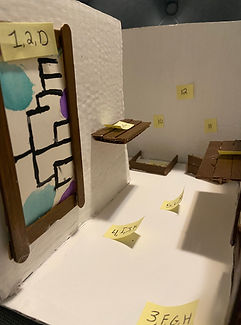
Labeled Museum Diorama
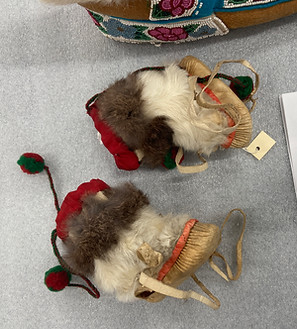
Children's Mukluks
Burke Museum Cultural Collections
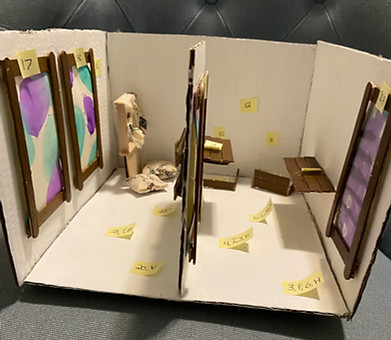
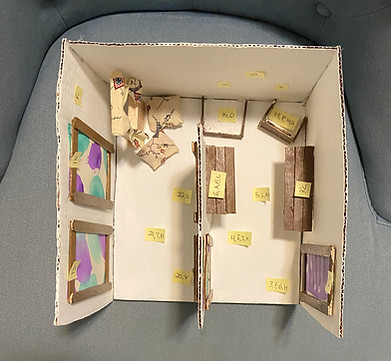
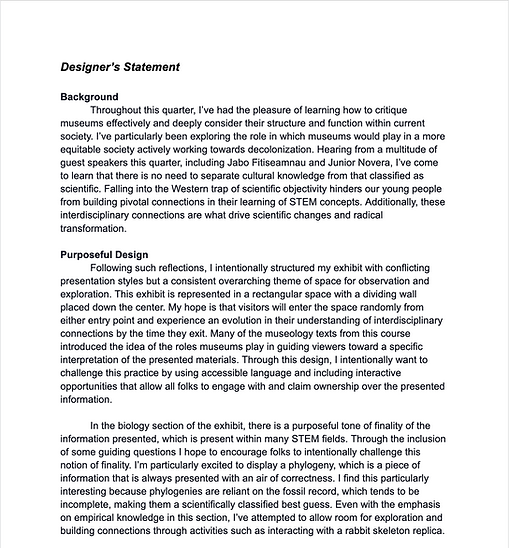
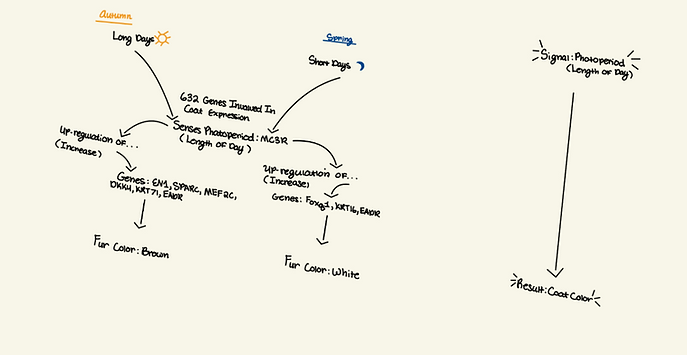
Exhibit Excerpt on Seasonal Pelt Variation in Snowshoe Hares
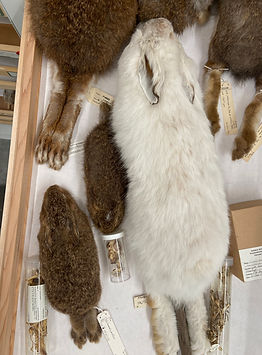
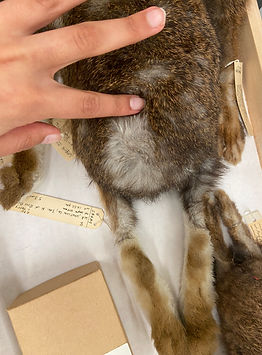
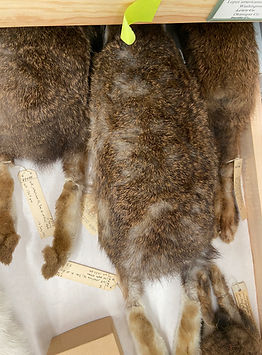
Snowshoe Hares Pelts
Burke Museum Biological Collections